Lapp ÖLFLEX SERVO FD Control Cable, 8 Cores 18 AWG, 50 m, Screened Stranded, Orange Polyurethane Sheath
- N° de stock RS:
- 800-3221
- Référence fabricant:
- 0027969
- Fabricant:
- Lapp

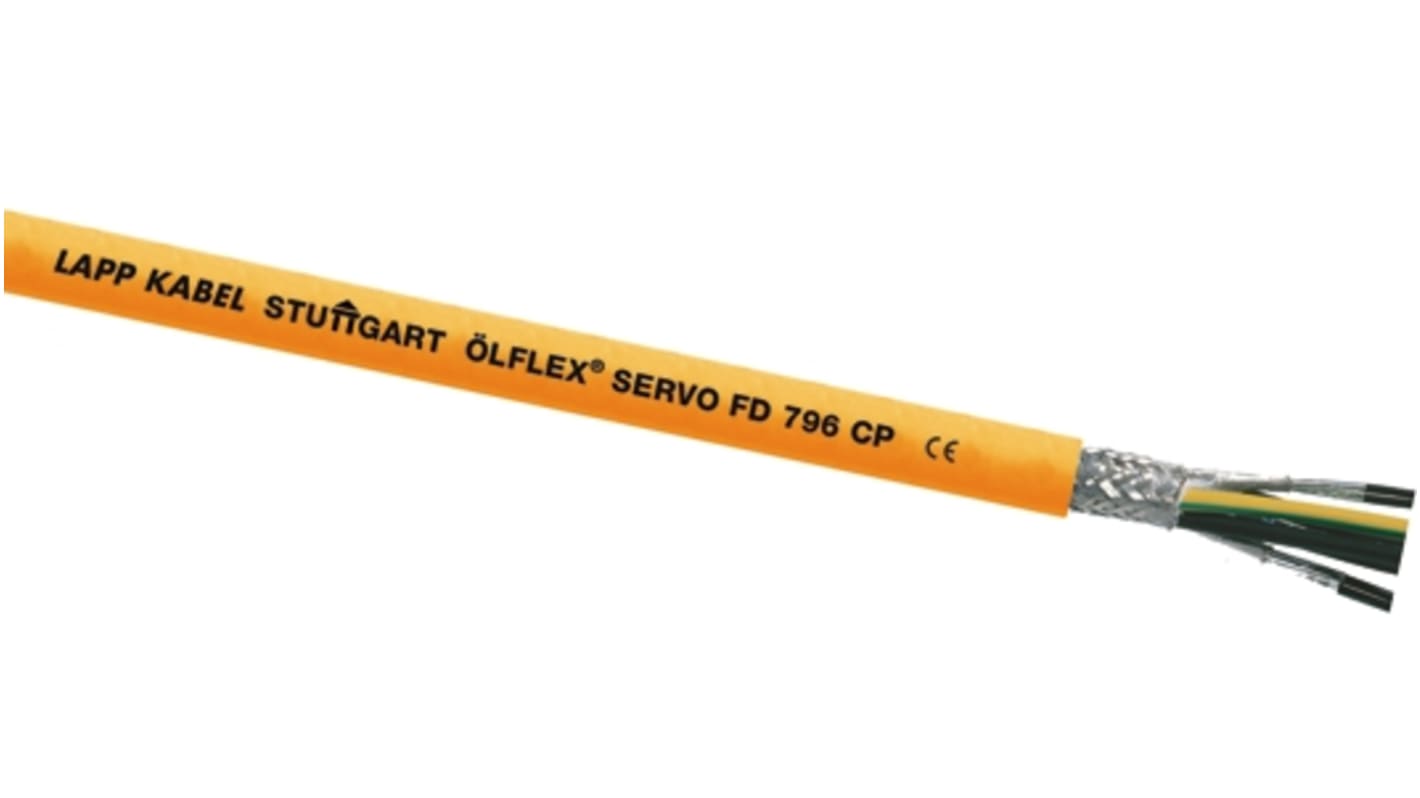
Visuel non contractuel
Sous-total (1 bobine de 50 mètres)*
1 110,68 €
(TVA exclue)
1 343,92 €
(TVA incluse)
Frais de livraison offerts pour toute commande de plus de 90,00 €
Temporairement en rupture de stock
- Expédition à partir du 24 août 2026
Besoin de plus? Cliquez sur " Vérifier les dates de livraison " pour plus de détails
Bobine(s) | la bobine | le mètre* |
|---|---|---|
| 1 + | 1 110,68 € | 22,214 € |
*Prix donné à titre indicatif
- N° de stock RS:
- 800-3221
- Référence fabricant:
- 0027969
- Fabricant:
- Lapp
Spécifications
Documentation technique
Législations et de normes
Détails du produit
Recherchez des produits similaires en sélectionnant un ou plusieurs attributs.
Sélectionner tout | Attribut | Valeur |
|---|---|---|
| Marque | Lapp | |
| Series | ÖLFLEX SERVO FD | |
| Product Type | Control Cable | |
| Number of Cores | 8 | |
| Conductor Material | Copper | |
| Jacket Material | Polyurethane | |
| Jacket Colour | Orange | |
| Screened/Unscreened | Screened | |
| Cable Length | 50m | |
| Conductor Type | Stranded | |
| Standards/Approvals | CE | |
| Maximum Operating Temperature | 90°C | |
| American Wire Gauge | 18AWG | |
| Sélectionner tout | ||
|---|---|---|
Marque Lapp | ||
Series ÖLFLEX SERVO FD | ||
Product Type Control Cable | ||
Number of Cores 8 | ||
Conductor Material Copper | ||
Jacket Material Polyurethane | ||
Jacket Colour Orange | ||
Screened/Unscreened Screened | ||
Cable Length 50m | ||
Conductor Type Stranded | ||
Standards/Approvals CE | ||
Maximum Operating Temperature 90°C | ||
American Wire Gauge 18AWG | ||
- Pays d'origine :
- DE
LAPP Control Cable, 12.2mm OD, 4 Cores - ÖLFLEX SERVO FD Series - 0027969
Use this control cable from LAPP to send signals and power to industrial equipment. It's an earth type with four cores for enhanced durability. The robust sheath is MADE from oil-resistant PUR and can withstand a wide operating temperature range between -40°C and +90°C, making it suitable for harsh conditions. Thanks to the high conductivity of its thin copper wires, you can rely on this cable for high conductivity.
Features & Benefits
• 12.2mm outer diameter for use in Compact setups
• 18AWG wire size for easy compatibility
Applications
• Factory automation
• Process and packing industry
• Telecommunications systems
What's the difference between a screened and an unscreened cable?
In screened cables like this one, some of the wires or the whole cable are covered by sheathing, reducing potential interference with nearby devices from electrical noise and electromagnetic radiation. Unscreened cables have wires that are twisted together without an internal jacket, so they tend to be more flexible.
Liens connexes
- Coral G950-06809-01 for use with Raspberry Pi
- Siemens SIMATIC S7-1200 Series PLC CPU for Use with SIMATIC S7-1200 Series Transistor Output 2
- Carling Technologies Illuminated DPDT, On-(On) Rocker Switch Panel Mount
- SICK Encoder Collets for Use with DBS36E-BBxxxx
- Littelfuse Through Hole Gas Discharge Tube
- Igus GFM-0607-08 6mm Bore Plain Bearing, 7mm O.D
- Raspberry Pi QWERTY (Spain) Raspberry Pi Keyboard
- Coral Google Mini PCIe M.2 Accelerator B/M Development Kit G650-04686-01