
Offre groupée disponible
Sous-total (1 boîte de 5 unités)*
568,61 €
(TVA exclue)
688,02 €
(TVA incluse)
Frais de livraison offerts pour toute commande de plus de 75,00 €
En stock
- Plus 25 unité(s) expédiée(s) à partir du 11 décembre 2025
Besoin de plus? Cliquez sur " Vérifier les dates de livraison " pour plus de détails
Unité | Prix par unité | La Boite* |
|---|---|---|
| 5 - 20 | 113,722 € | 568,61 € |
| 25 - 45 | 110,766 € | 553,83 € |
| 50 + | 108,036 € | 540,18 € |
*Prix donné à titre indicatif
- N° de stock RS:
- 173-0775
- Fabricant:
- RS PRO
Spécifications
Documentation technique
Législations et de normes
Détails du produit
Recherchez des produits similaires en sélectionnant un ou plusieurs attributs.
Sélectionner tout | Attribut | Valeur |
|---|---|---|
| Marque | RS PRO | |
| Series | WT22 | |
| Stroke | 50mm | |
| Shaft Diameter | 22mm | |
| Mounting Type | Spring Return | |
| Sélectionner tout | ||
|---|---|---|
Marque RS PRO | ||
Series WT22 | ||
Stroke 50mm | ||
Shaft Diameter 22mm | ||
Mounting Type Spring Return | ||
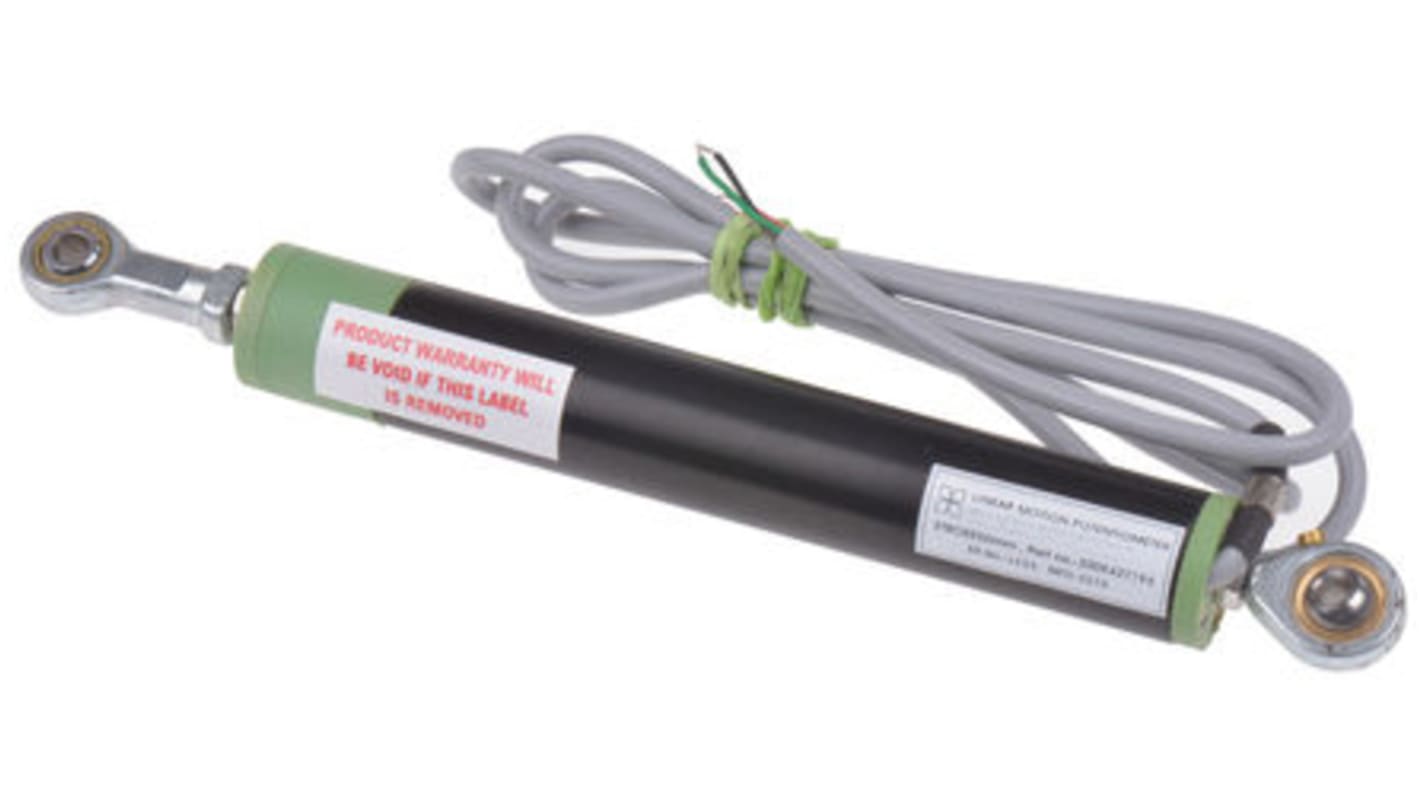
RS PRO Conductive Linear Potentiometers - Rod End
Brought to you by RS PRO, a series of linear potentiometers suitable for various applications. Widely used within electronics, each model can be mounted within various devices or even on PCB applications. These particular models will excel within audio or electronic uses. All models are highly reliable and excellent quality.
Features and Benefits
• Robust construction
• Standard resistance tolerance of ±20%
• Electrical life of 5,000,000 strokes
• Various stroke lengths available
• Essentially infinite
• Standard resistance tolerance of ±20%
• Electrical life of 5,000,000 strokes
• Various stroke lengths available
• Essentially infinite
What is a potentiometer?
A potentiometer is a variable resistor which increases or decreases the resistance in an application. Usually available as either digital or analogue, there are two main types of potentiometers, rotary and linear.
• Linear - comes in a rectangle strip shape and can be pulled up or down for the required resistance, Used a lot within sound systems for mic output or volume control.
• Rotary - the shaft is housed by a knob, you would find these on dimmer switches or speakers, turning (usually to the right) will increase the resistance amplifying the output, whether that is light, sound or voltage.
• Linear - comes in a rectangle strip shape and can be pulled up or down for the required resistance, Used a lot within sound systems for mic output or volume control.
• Rotary - the shaft is housed by a knob, you would find these on dimmer switches or speakers, turning (usually to the right) will increase the resistance amplifying the output, whether that is light, sound or voltage.
How do potentiometers work?
Used in various applications, potentiometers operate as a resistor for electronic devices. As an example, a dimmer switch you would find in place of a light switch would house a potentiometer. Whichever direction it is turned, either increases or decreases the resistance, manipulating the light output from the bulb. Another common use would be speaker or sound systems, operating as a volume switch. There are various types of element material, usually as rotary or linear, such as:
• Wire-wound
• Conductive
• Plastic
• Carbon
• Cermet
• Wire-wound
• Conductive
• Plastic
• Carbon
• Cermet
How do these rod end potentiometers work?
Although these models have a different design from standard potentiometers, they operate as a linear potentiometer. Imagine the process of using a slide whistle, these work in a similar operation, the resistance can either be increased or decreased by sliding the rod end in and out of the housing.
Liens connexes
- RS PRO Linear Transducer, 22mm Shaft
- RS PRO Linear Transducer, 4mm Shaft
- RS PRO Linear Transducer, 6mm Shaft
- RS PRO Linear Measuring Linear Transducer
- RS PRO Linear Transducer
- Baumer GCA Series Transducer Linear Transducer 18mm Shaft
- Vishay REC 34L Series Linear Measuring Linear Transducer, 5mm Shaft
- Vishay REC 50L Series Linear Measuring Linear Transducer, 3.18mm Shaft