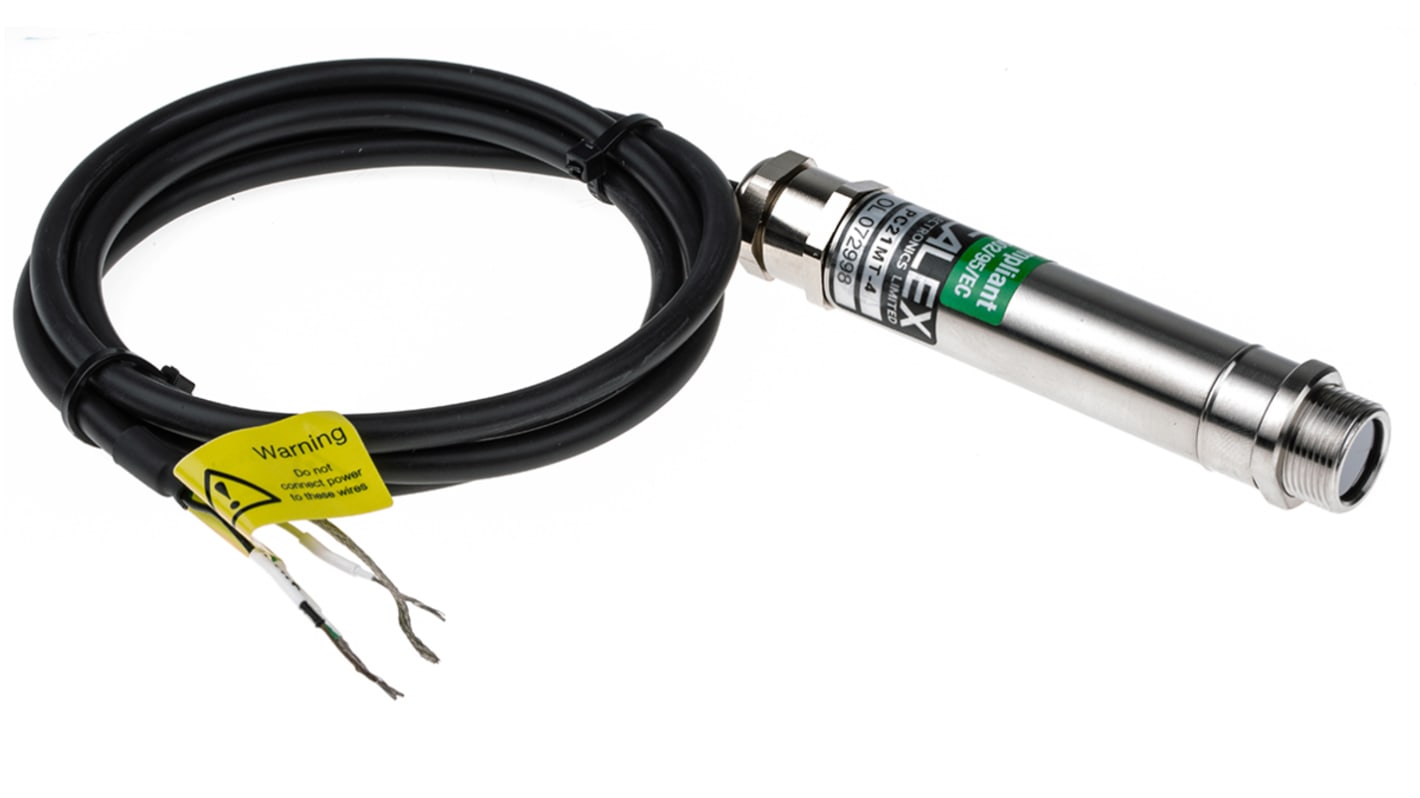
Calex PC21MT-4 Type K Thermocouple IR Temperature Sensor, 1m Cable, 0°C to +250°C
- N° de stock RS:
- 553-337
- Référence fabricant:
- PC21MT-4
- Fabricant:
- Calex

Sous-total (1 unité)*
232,97 €
(TVA exclue)
281,89 €
(TVA incluse)
Frais de livraison offerts pour toute commande de plus de 75,00 €
En stock
- 8 unité(s) prête(s) à être expédiée(s)
- Plus 9 unité(s) prête(s) à être expédiée(s) d'un autre centre de distribution
- Plus 9 unité(s) expédiée(s) à partir du 26 janvier 2026
Besoin de plus? Cliquez sur " Vérifier les dates de livraison " pour plus de détails
Unité | Prix par unité |
|---|---|
| 1 + | 232,97 € |
*Prix donné à titre indicatif
- N° de stock RS:
- 553-337
- Référence fabricant:
- PC21MT-4
- Fabricant:
- Calex
Spécifications
Documentation technique
Législations et de normes
Détails du produit
Recherchez des produits similaires en sélectionnant un ou plusieurs attributs.
Sélectionner tout | Attribut | Valeur |
|---|---|---|
| Marque | Calex | |
| Sensor Type | Type K Thermocouple | |
| Response Time | 240 ms | |
| Accuracy | ±1°C or ±1% of reading | |
| Cable Length | 1m | |
| Supply Voltage | 6 → 28 V dc | |
| Minimum Temperature Sensed | 0°C | |
| Output Type | Type K Thermocouple | |
| Light Source | Infrared | |
| Maximum Temperature Sensed | +250°C | |
| Housing Material | Stainless Steel 316 | |
| Mounting Type | M16 x 1 mm Thread | |
| Diameter | 18 mm | |
| IP Rating | IP65 | |
| Sélectionner tout | ||
|---|---|---|
Marque Calex | ||
Sensor Type Type K Thermocouple | ||
Response Time 240 ms | ||
Accuracy ±1°C or ±1% of reading | ||
Cable Length 1m | ||
Supply Voltage 6 → 28 V dc | ||
Minimum Temperature Sensed 0°C | ||
Output Type Type K Thermocouple | ||
Light Source Infrared | ||
Maximum Temperature Sensed +250°C | ||
Housing Material Stainless Steel 316 | ||
Mounting Type M16 x 1 mm Thread | ||
Diameter 18 mm | ||
IP Rating IP65 | ||
- Pays d'origine :
- GB
High Performance PyroCouple Series
High quality, low cost, non-contact Infra-red temperature sensors suitable for measuring the temperature of inaccessible or moving objects and materials.
Fast response with high stability
Types available with air/water cooled housings
Quick and easy to install
Available as either two-wire or four-wire units
240 ms to 90% response time
Stainless steel housing
M16 x 1 mm mounting thread
Prewired 1 m cable connection
6 V dc minimum sensor voltage
0.95 emissivity
Temperature change varies by model
Two-wire sensors transmit the target temperature as a 4-20 mA output and offer a simple solution for most non-contact temperature measurement applications.
Four-wire sensors transmit the target temperature as a 0-50 mV or thermocouple output, and in addition transmit the internal temperature as a 4-20 mA output. This second output can be used to ensure that the sensor is being operated within the correct ambient temperature limits and prevent damage caused by overheating or overcooling. It can also be used to give an approximate indication of the air temperature surrounding the sensor.
Liens connexes
- Calex PC21MT-3 Type J Thermocouple IR Temperature Sensor 0°C to +250°C
- Calex PC21MT-0 mA Output Signal IR Temperature Sensor 0°C to +250°C
- Calex PC21MT-0WJ mA Output Signal IR Temperature Sensor 0°C to +250°C
- Calex PC21MT-1 mV Output Signal IR Temperature Sensor 0°C to +250°C
- Calex PN151-K Type K Thermocouple NFC IR Temperature Sensor 0°C to +1000°C
- Calex PMO-151-HT-K Type K Thermocouple IR Temperature Sensor 0°C to +500°C
- Calex PC151MT-3 Type J Thermocouple IR Temperature Sensor 0°C to +250°C
- Calex PMO-151-HT-J Type J Thermocouple IR Temperature Sensor 0°C to +500°C